
“Starving Amidst Plenty” is a familiar term among the medical fraternity — used for diabetic situations where the body is starved despite excess sugar in the bloodstream. SLM Uganda borrows this term to describe a common phenomenon in the country's agriculture.
In the past, farmers in many parts of the country enjoyed well-defined rainy and dry seasons. During the rainy season, rains fell in the right amounts, at the right time, lasting a full cropping season. Due to climate variability and change, a lot has shifted. Although the annual average rainfall has not changed much over the past three decades (Mubiru et al., 2012), there is now considerable temporal and spatial variability.
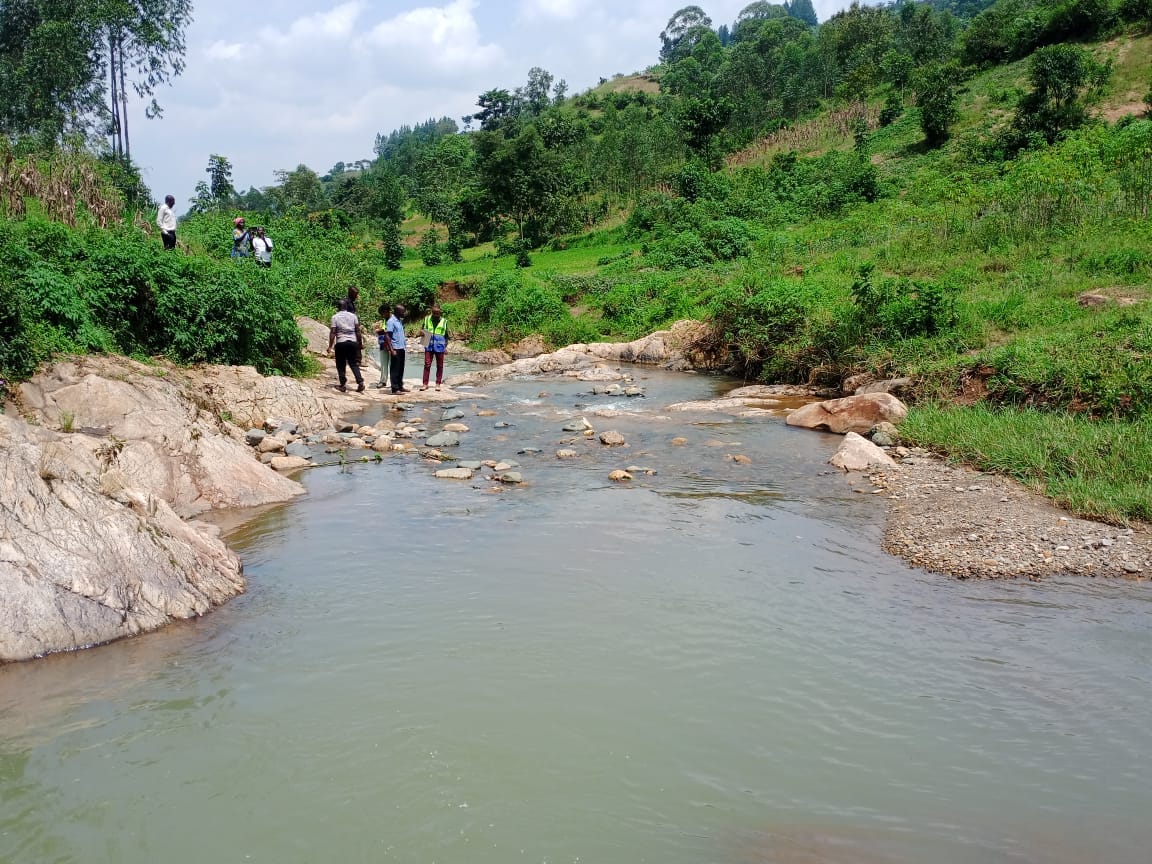
Heavy storms sometimes arrive when least expected, and when they do, most of that rainfall is lost as runoff, causing immense damage. Just as excess blood sugar ravages the body, unmanaged runoff ravages the land — it has been documented that no soil phenomenon is more destructive than soil erosion (Brady and Weil, 1996). This degradation process has had lasting effects on human welfare throughout history: past civilisations, empires and cultures have disintegrated as their once-deep, productive soils were washed away, leaving thin, infertile, droughty and rocky relics of the past.
The scale of the problem in Uganda
In Uganda today, accelerated land degradation — including soil erosion and soil fertility decline — is among the major threats to sustainable agricultural production across all Agricultural Production Zones. Highly variable rainfall and temperature have also led to soil moisture stress, and the situation is aggravated by limited uptake of proven soil management technologies and practices among farming communities.
In combination, these problems threaten long-term food security and environmental sustainability in Uganda. It is estimated that up to 12% of the country's gross domestic product (GDP) is lost through environmental degradation, with 85% of that loss coming from a combined effect of soil erosion, nutrient loss and declining crop yields.
The SLM response
With support from the Global Environment Facility (GEF), Uganda is implementing a Sustainable Land Management (SLM) project across four identified land degradation hotspots nationally. The project targets construction of a combined total of approximately 13,000 hectares of terraces, contour bunds and grass bunds.
This is estimated to impound between 4 and 32 million cubic metres of runoff; 0.4 to 1.1 million tonnes of soil; 65,000 to 767,000 kilograms of nutrients; and 6 to 68 million tonnes of total organic matter that would otherwise be lost from farmland each year.
Runoff harvesting of this kind offers an opportunity for the sustainable management of bare hills for crop production, rangeland improvement, and is equally applicable to the rehabilitation of degraded landscapes. The underlying principle is simple: encourage water to move into the soil rather than off it, so the soil can serve as a reservoir for future plant uptake.
By Drake N. Mubiru, Senior Research Officer (drakenmubiru@yahoo.com) & Jalia Namakula, Graduate Assistant — National Agricultural Research Laboratories (NARL), Kawanda / National Agricultural Research Organization (NARO).